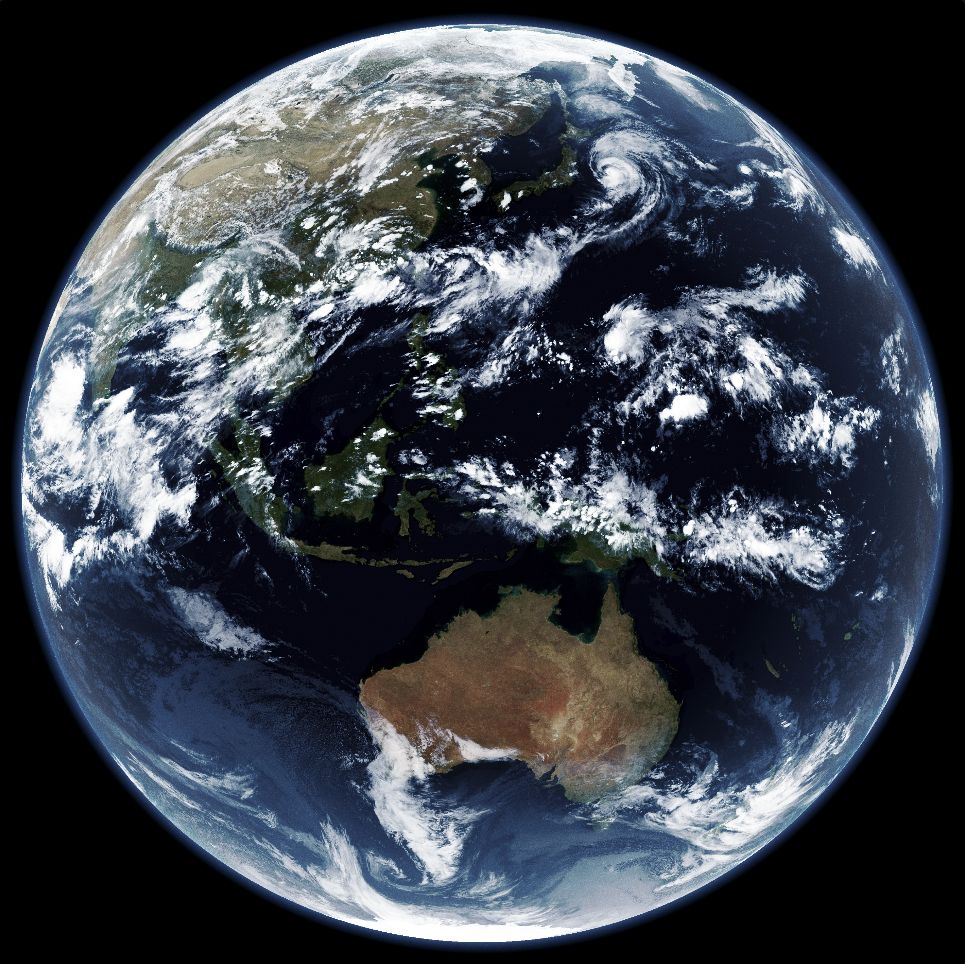
Receiving Images from Space
Radios pick up broadcasts, phones connect to cell towers, and GPS receivers listen to satellites. Most of these devices are built to receive signals within a narrow range of the radio spectrum. For around $40, a small USB device called software-defined radio (SDR) lets you receive signals across a much wider range and process them on your computer. Cool, right?
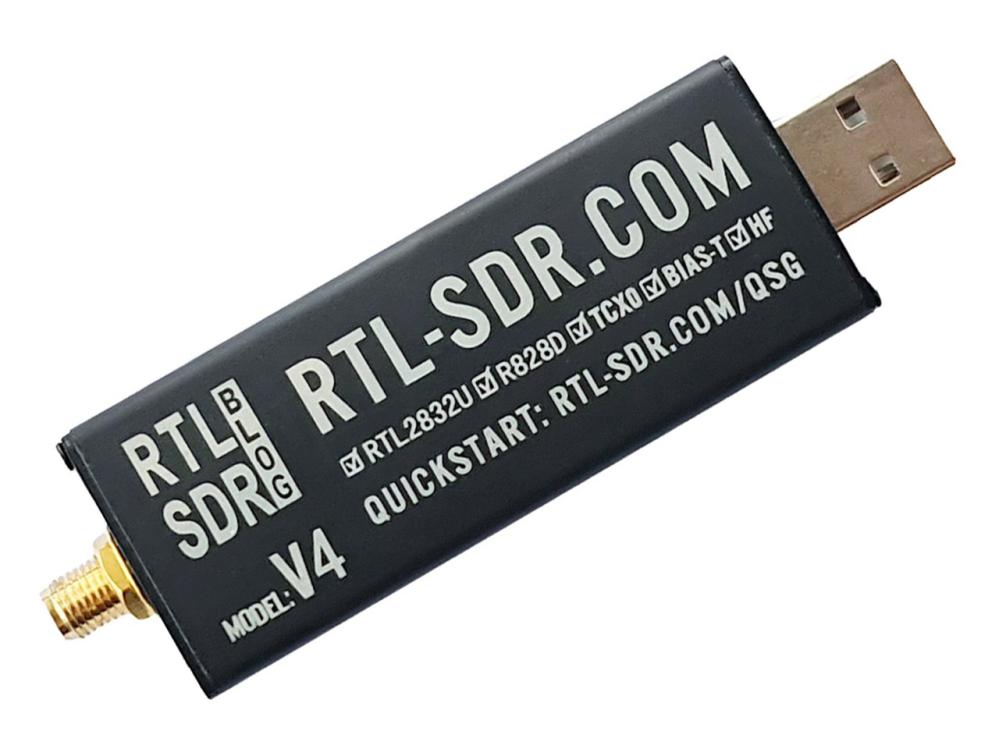
What can you do with it? The sky’s the limit! You can listen to radio broadcasts, pick up police walkie-talkies (not sure if this is legal), track aircraft, or even receive images of Earth from weather satellites. That last one caught my attention. I live in Korea, within view of a geostationary weather satellite GEO-KOMPSAT 2A (GK-2A), so I decided to give it a try.
To receive the images, I need a laptop, an SDR, and an antenna/reflector pair. The antenna/reflector is the tricky part: GK-2A transmits at around 1.7 GHz, and its signal is very weak by the time it reaches us. I started with a simple dipole antenna on a tripod, with an aluminum food container (yes) behind it as a reflector.
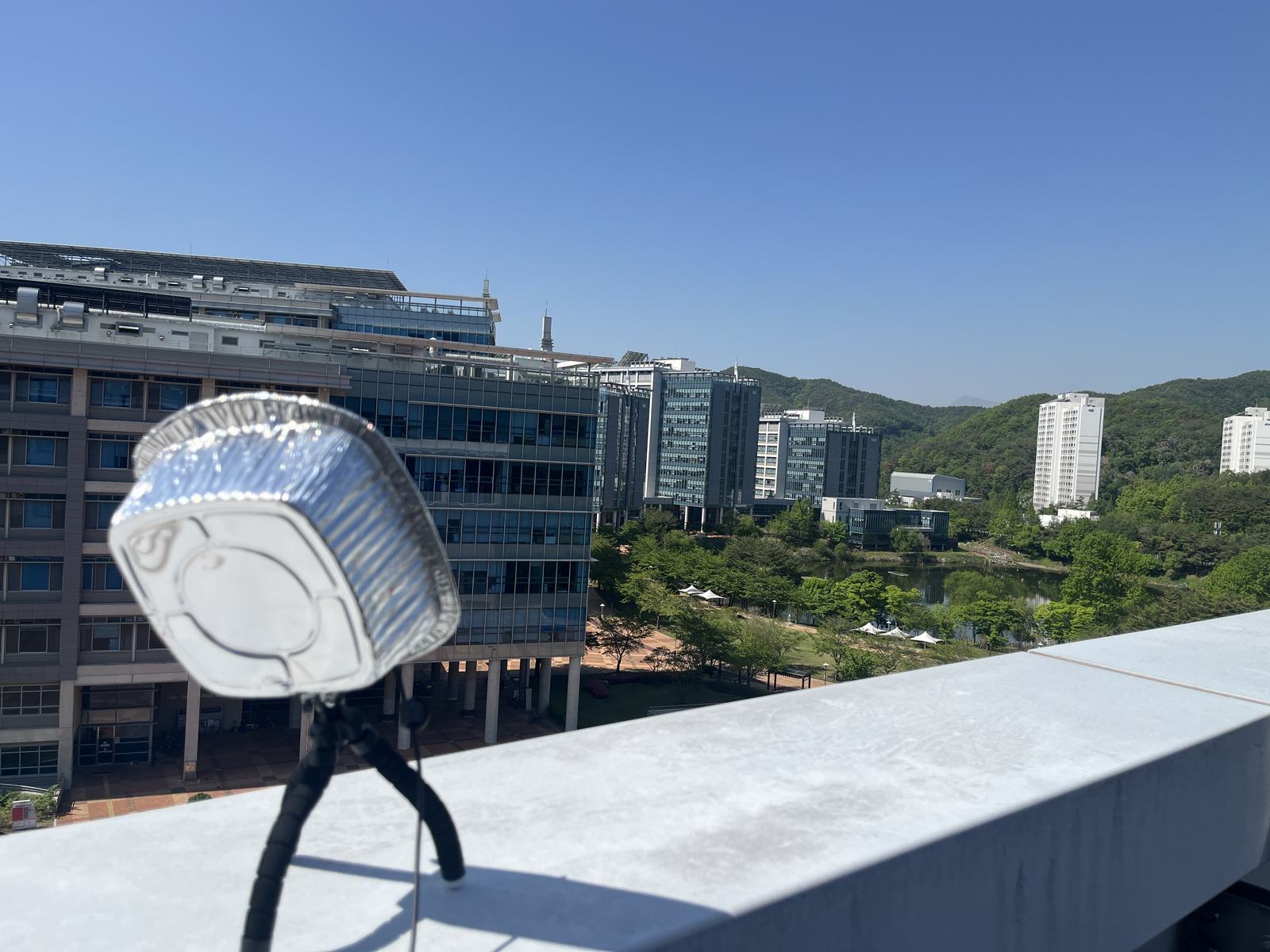
That didn't work, and I received no signal from the satellite at all. I decided to upgrade the antenna next, and built a Yagi-Uda antenna, with dimensions tuned to the satellite's transmission frequency. This is supposed to work a lot better than a dipole antenna.
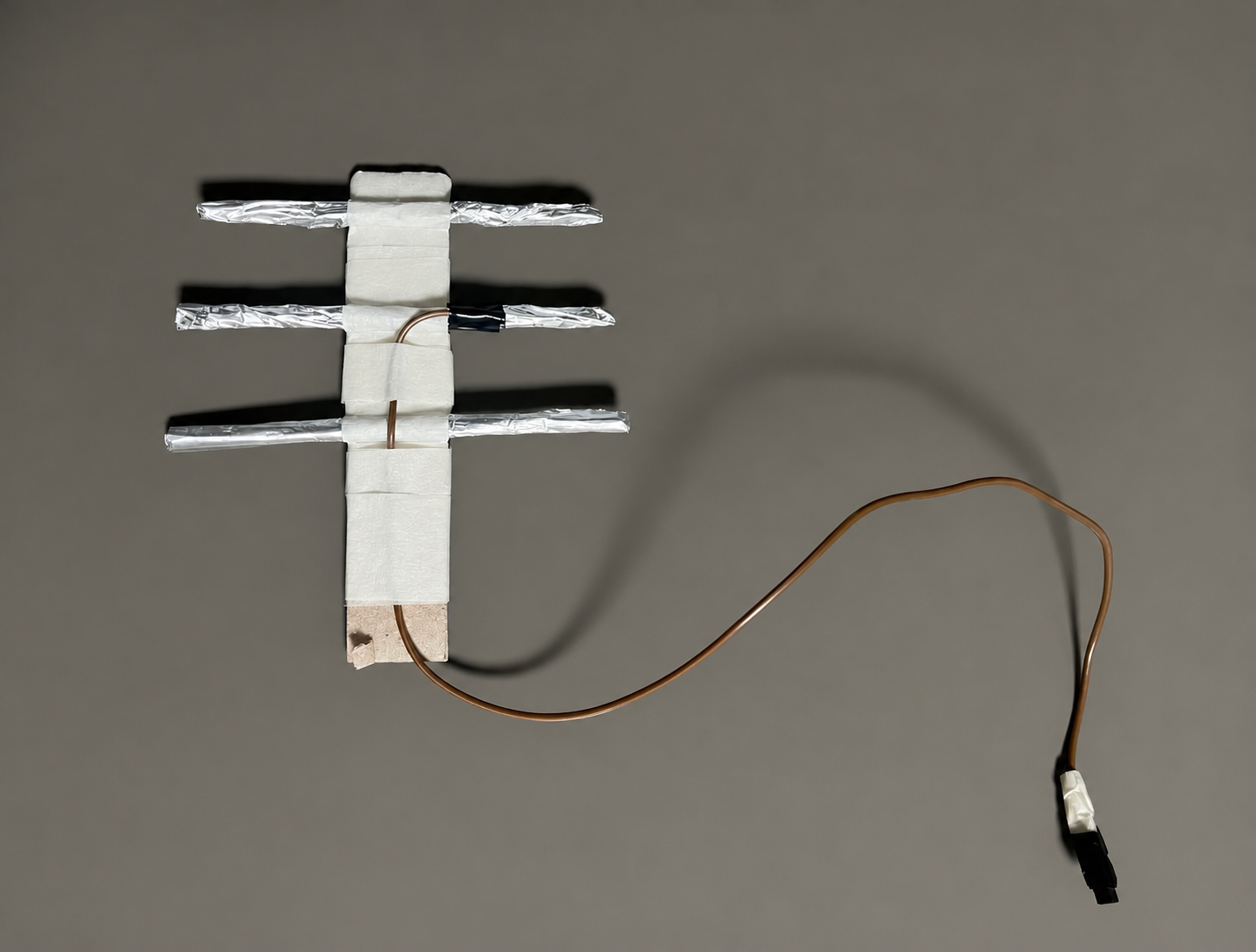
Still no signal. The next upgrade comes to the reflector. I picked up an old umbrella, covered its inside in aluminum foil, and placed my antenna on the axis where the signal reception was supposed to be the strongest. The direction you point the reflector can matter a lot for the reception strength. There are tools (dish pointers) to compute the exact angle you need! GK-2A was about 49° above the horizon from my location, which made my location quite a good one to receive its signal.
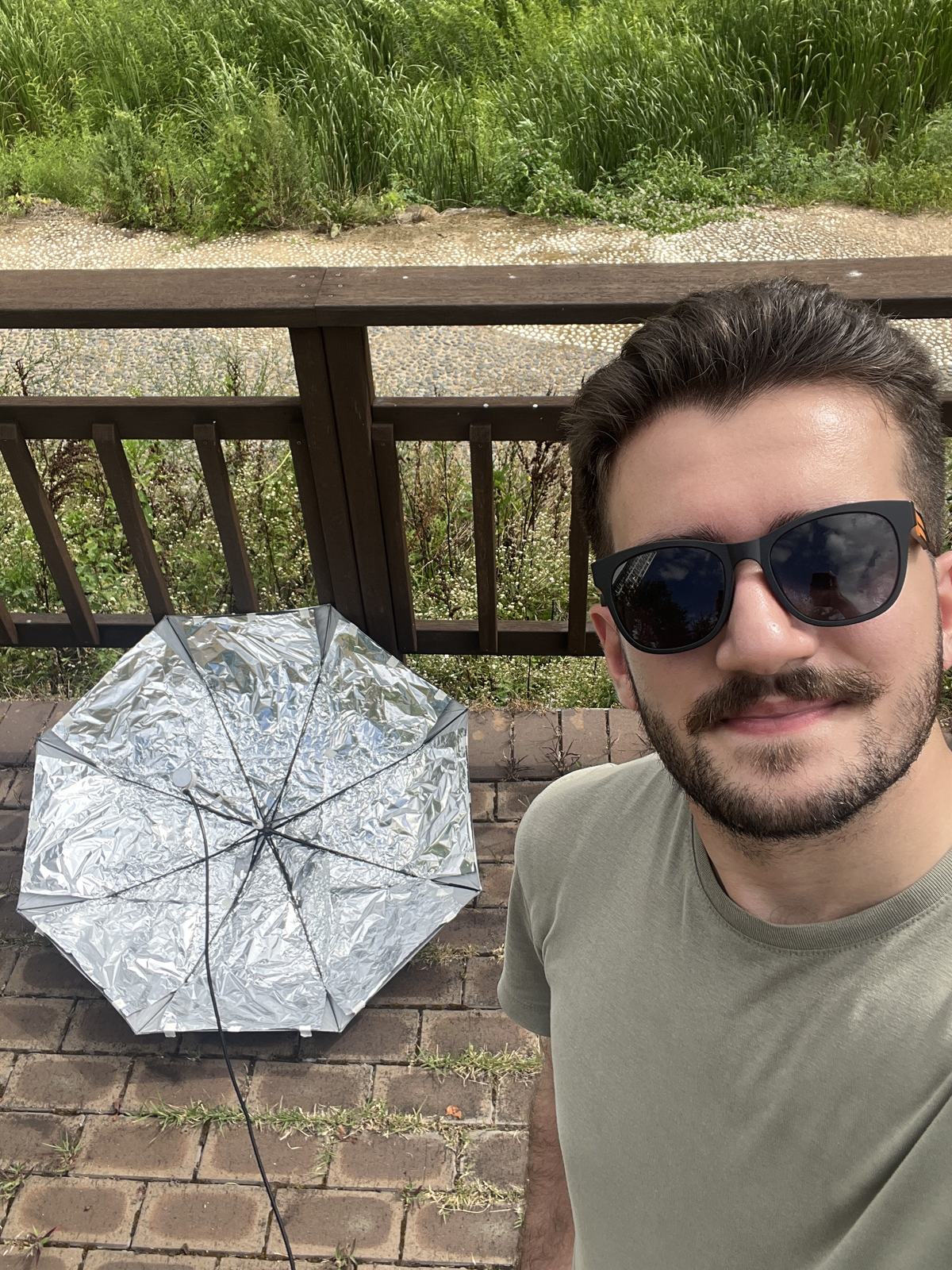
Aaand finally, a signal! GK-2A’s transmissions are encrypted, but the decryption keys are publicly available, so decoding the images is straightforward. They arrive in grayscale; after some post-processing, I got the image below. A new image comes through about every ten minutes, so the next step is to collect enough for a timelapse. That means spending more time outside with the setup, though, and Korean summers are hot. That will wait until the next season.